Sunday, December 2, 2018

Why Don't More People Buy Electric Cars?


In 2018, there are more electric cars and plug-in hybrid vehicles for sale in the US than ever before. Some examples include: the Nissan Leaf, Chevrolet Volt, Chevrolet Bolt, Tesla Model S, Tesla Model X, and Tesla Model 3.

But there is one big problem holding these vehicles back from widespread adoption.

It's not the cost.
It's not the range.
It's not a lack of consumer information or confidence in the technology.

The problem is that electric cars are for homeowners, not renters.

Take a big step back and think about the concept of a car. People store cars at their homes, but the process of refueling takes place away from the home - at a gas station usually located a short distance away.

The move to electric cars also changes the way in which we use cars. With an electric car, the refueling is now shifted away from the corner store to your home. A high-voltage home charger is an essential part of owning this type of vehicle.

But therein lies a huge problem: not everyone is able to install an EV charger in their home, because millions of American households are renters.


Whether you are renting a single-family detached home or live in a multi-family unit like an apartment, condo, or townhouse, many rental properties have outdoor parking for their tenants with no possible way to install a high-voltage charger to support electric vehicle ownership.

The percentage of American households that are renters has been climbing steadily over the last decade, and is now at record high levels.

I bet there are plenty of people who would consider owning an electric or plug-in hybrid vehicle, but are forced to rule them out simply because they are not able to install a charger at their home. Either the landlord or rental company will not allow it, or they park in a covered/uncovered space or parking garage with no access to a 240-volt outlet.

If someone can solve this problem, I think it would greatly increase the potential of electric vehicle ownership for a significant number of households.

Wednesday, November 21, 2018

No Airbags, We Die Like Real Men


I was recently filling up my car at the gas station when I noticed the vehicle on the other side of the pump. It was a third-gen Acura Integra, dark green, produced between 1994 to 2001. On the windshield there was a black and white sticker that read "No Airbags, We Die Like Real Men."

Let's analyze this statement by breaking it down into its elements: cars, death, and honor.

First, let's talk about the car.

In the United States, the safety of automobile passengers has historically taken a backseat compared to other vehicle innovations in design, power, and fuel economy. Seat belts were required on all new vehicles sold starting in 1968, which was 75 years after the first practical American automobile was produced in 1893. Later still were airbags, which were required on all new vehicles sold after September 1, 1998 per a law passed in 1991. This was nearly 50 years after the first airbags were developed in the early 1950s. 

When the 3rd generation Integra debuted in 1994, it featured dual front airbags to protect the occupants in the event of a crash. Like many other auto manufacturers, Acura was compliant with the 1991 law well before it was fully enforced in 1998. The only cars on the road today that do not have airbags as standard equipment are vintage/classic cars, such as those built in the 1950s-1980s which are mostly driven by collectors to car shows. The Integra next to me at the gas station was certainly not a classic car.

Next, we will talk about death.

On a long enough timeline, no one escapes death. But there is a difference between dying from an unpreventable situation versus dying early from a preventable cause. Dying before reaching your full life expectancy is often a tragic affair for one's family and friends.

The grief-stricken family will be especially upset if they learn that the death of their friend or family member could have been avoided through some small amount of caution like wearing a helmet, looking both ways, living a healthy lifestyle, wearing a seat belt, or driving a car equipped with functioning air bags. Each of these choices have been proven to significantly reduce the risk of dying early from a preventable cause or accident.

Finally, we come to the last topic which is honor.

When a person dies, their friends and family must deal with the situation. In their grief, they may evaluate the circumstances of the deceased person's passing. The death of a person can be dishonorable, like when a terrorist injures or kills other people and then kills themselves. Death can be neutral, like when a person passes away quietly in their sleep. And death can also be honorable, like a soldier who dies from injuries sustained while performing a heroic deed, like saving fellow soldiers from a dangerous situation.

All this is to say that modern cars come equipped with airbags to help save lives in the event of a survivable accident. The idea that making a reckless decision and dying in a survivable crash is somehow honorable or something to be proud of is absolutely absurd. The idea that this makes you a "real man" is so stupid, it's almost beyond comprehension.

If the sticker was a joke, it's not very funny or clever. If the sticker was completely serious, then it is no great loss to the human race if you should die unnecessarily as a result of your own ignorance.


Friday, February 23, 2018

Rise of the Monthly Subscription Services

Everyone has bills to pay. Rent, groceries, and some kind of utility payments such as electricity/water/gas are unavoidable no matter where you live. You may or may not have a car payment, student loan payment, mortgage, and other things such as a cell phone or cable TV/Internet service. It can be disheartening to watch so much of your hard-earned money go out the window each month to these basic expenses.


As if that weren't enough, there are a number of services that have come out recently that have taken traditional consumer goods and "reinvented" them by turning the purchase cycle from "as needed" into a monthly subscription model.

From the 1970s to the 1990s, the typical American household would have had relatively few subscription services. Perhaps their local newspaper, maybe a magazine like Time or Reader's Digest, and very likely a Cable TV service. Today there are innumberable services you could be subscribing to, all with the goal of "disrupting" an established big industry.

Now instead of cable, you can pay $9.99/month for Netflix, $7.99/month for Hulu, $12.99/month for Amazon Prime Video, $15/month for HBO Now, $20/month for Sling TV, $35/month for YouTube TV, or $39/month for a PlayStation Vue subscription. Any one of them offers substantial savings over the traditional $90-$150 cable bill from Comcast, Charter, Cox, Cable One, and other providers. But if you want to watch both Game of Thrones (HBO) and House of Cards (Netflix), you must subscribe to each service, which can quickly add up.

Now instead of buying shaving razors at the drugstore as needed, you can subscribe to Dollar Shave Club or Harry's for anywhere from $9 to $21 per month for mail-order shaving supplies. Somehow men have managed to stay clean shaven for generations without having supplies "delivered to your doorstep," so I question the value add of these services.

Home security is another market quickly transitioning to the monthly-subscription model. My local cable company offers home security cameras and monitoring for $30/month ($40/month if not bundled with any other services). Nest also offers cloud-based backups of your home security cameras for $5 to $30 per month. While a home security system can help identify a burglar, these services to little to secure the home in the first place and provide peace-of-mind rather than actual security.

Adding to the monthly cost for creative professionals is online data storage and photo backup, which will run you $6 a month for Carbonite or $0.99/month with Apple's iCloud service. Adobe's famous Creative Suite has also switched to a cloud-based, monthly subscription service at $49/month for the full suite. 

Vanity services recently experienced a boom in popularity. Services like BirchBox, BarkBox, NatureBox, LootCrate, and many imitators provide a monthly box of samples and goodies for whatever you are into - makeup, pet accessories, gaming culture, or anything else you can imagine.

Finally, we come to meal delivery services. Between Hello Fresh, Blue Apron, Plated, Sun Basket, and others have created meal kits that can be assembled by people with limited to no cooking experience. These services have taken home meal preparation - historically one of the cheapest ways of eating - and turned it into a "premium" experience that costs anywhere from $9 to $12 per meal.

There is an old Chinese expression called "lingchi" which roughly translates to "death by a thousand cuts." I feel like it is very easy to sign up for a free trial for each of these services and before you know it, your bank account is being silently drained by a multitude of small subscriptions each month.

While I don't doubt that one or two of them might add real value to your everyday life, the sheer proliferation of these services during the last 5-8 years feels like an all-out war for my hard-earned dollars.

They're also not that innovative, doing the slightly modernized version of what the Sears Catalog did a century ago. Combining an existing consumer product with a monthly subscription does not make it an innovative new business model. It looks great to investors to have that Monthly Recurring Revenue, but all of these businesses are targeted towards price-conscious consumers who will jump ship to your competitor if they have a better price or offer. 

I'm not the only one who feels this way:
https://www.npr.org/sections/alltechconsidered/2013/05/09/182426256/consumers-facing-subscription-service-overload-will-only-get-more-choices
https://www.forbes.com/sites/schifrin/2016/11/03/has-the-subscription-box-boom-turned-into-a-bubble/
https://qz.com/index/1161993/americans-are-overwhelmed-by-too-many-available-tv-subscription-services/


Wednesday, March 19, 2014

Ironic Band Names

A few years ago, I wrote about a trend I noticed where hardcore bands were adopting these "verb-the-noun" names en masse.

Now, I've spotted a new trend among indie bands trying to come up with the ultimate ironic band name. Many of them are trying to be funny, but mostly they are just ripping off the status of a celebrity.


Take these band names for example:

  • Gnarls Barkley
  • Ylvis
  • Dale Earnhardt Jr. Jr.
  • Com Truise
  • Danananaykyrod
  • Joy Orbison
  • Hoodie Allen
  • Gringo Starr
  • Ringo Deathstarr
  • Tiger & Woods
  • Andrew Jackson Jihad
  • Abraham Drinkin
  • George Moshington
This is a ridiculous trend for several reasons. First of all, it's not very original. Second, basing your band on a misspelling is a terrible way to get people to find you online in the Internet age. Third, most of them are pretty childish. Fourth, it's just piggybacking on someone else's status.

I'm not the only one who feels this way:
http://breezyk.wordpress.com/2013/04/17/when-did-vowels-stop-being-cool/
http://rateyourmusic.com/list/monocle/band_names_referencing_celebrities/
http://rateyourmusic.com/board_message?message_id=3455249

Sunday, February 24, 2013

The Myth of the Maintenance-Free Electric Car

Like it or not, the new age of electric cars is upon us. The Nissan Leaf, Ford Focus Electric, and Tesla Model S are the latest generation of pure electric vehicles to go on sale in the US.

Now I am not against the idea of electric cars. As a motoring enthusiast, my curiosity is piqued by anything with wheels and and engine, regardless of whether it runs on gasoline, diesel, propane, biofuel, electricity, or expensive champagne. However, there is one glaring inaccuracy about electric vehicles that I feel the need to correct.


I have read a great deal of news articles extolling the benefits of electric vehicles. Indeed, if you live in a city and primarily use your car for commuting, an electric car is a smart, environmentally sound, and efficient way to get around.

The part that gets me flustered is when a reporter claims that electric vehicles are "maintenance free." I can't tell you how many articles I've read that mention how the drivetrain in the Tesla Model S is so simple, it only has 3 moving parts. Buy one and all you will ever have to do is plug in the charger, right? Wrong.

While it's true that an electric car will never need to have its oil changed or a muffler replaced, there is still plenty of maintenance to be done.

Because it is still a vehicle that travels on the road, electric cars rely on rubber tires which must be rotated and kept at the proper pressure. By virtue of the fact that it has wheels, electric cars also need wheel bearings to help the car roll smoothly and brake pads to help the car stop - two more components which have a finite service life.

Electric cars have moving parts in the suspension and steering that use bushings which will, over long periods of time, wear out just like a fossil-fuel powered vehicle. Electric cars also have traditional car parts which are prone to breaking such as power windows, hinges, handles, and latches. Many of them have cabin air filters for the air conditioning system - another user-replaceable part.

Besides that, there are a number of specialty systems on an electric car which may need to be serviced. A pure electric vehicle will often rely on an electric powered blower motor for the heat and air conditioning. In the case of the Tesla Roadster, the battery pack is cooled with liquid, much like antifreeze/coolant in a traditional engine.

Again, I am not saying any of this to put down electric cars. Yes, I am aware that electric car owners will never have to get their hands dirty to change spark plugs and wires, an air filter, or engine oil. The traditional "tune up" will be a thing of the past. What I want to do is disspell the myth that by buying an electric car, you will be driving a magical "maintenance free" machine. There's still a lot to keep track of as a safe and responsible driver.

Wednesday, February 20, 2013

One Word Company Names

One of the most important things a company can do for itself is pick a good name. Historically, blue-chip American companies have names such as Bank of America, Coca-Cola, General Mills, and IBM. Lately, I've been noticing a trend in upstart American companies: they are all picking one-word company names.


Are these new generation of entrepreneurs trying to copy the success of Apple and Google? Possibly. Here are some of the new company names I've run across lately:

Box - Secure online file storage
Bump - Media sharing for smartphones

Canary - Wireless home security system
Coin - Replace multiple credit cards with one single card
Nest - The "learning" thermostat
Paper - Digital sketch book for iPad
Simple - Personal finance software
Square - Mobile payment processing
Stripe - Web payment processing
Vine - Looping video app from Twitter

Based on these companies, I have developed a formula for people looking to launch their own one-word startup company. Follow these easy steps and you'll be on your way to startup success in no time!

1. The Name
Obviously, it has to be a one-word name.
It should not be a portmanteau or empty vessel name like Groupon or Hulu, but an everyday word from the dictionary (preferably a noun).

2. The Website
The website must look really slick. Clean design with lots of whitespace and no more than 3 colors. Bonus points if your entire website is one long scrolling page (like an Apple product page).

3. The Video
The focus of your website is to get people to watch your introductory video, which is naturally hosted on Vimeo instead of YouTube, lending credence to the far more artistic-thinking audience your company cultivates. The video should not have any spoken dialogue, but should illustrate your company's product or service through a clever sequence of shots backed by an upbeat instrumental track and some inspirational words at the end.
(The similarities between Nest, Simple and Paper's videos are stunning).

4. The Press
Your company has to be mentioned absolutely everywhere. Not in mainstream media like the New York Times or Time Magazine, but on the web! You need profiles in FastCompany, TechCrunch, Engadget, Gizmodo, Huffington Post, Reddit, and all of the lower tier websites that scrape or syndicate content from the bigger ones.

5. The App
Whether the app IS your product/service or simply facilitates one, you need a mobile app. It has to be available for both iOS and Android platforms.

6. The Business Model
The product should use the freemium model in which some of the functionality is given for free, and members can subscribe for a low monthly fee to enable complete functionality. For product based models (such as Tesla or Nest) there should be no more than 3 variations of the product. Keep it simple.

Here are some new companies I have just now invented using my own formula:

Bound - An on-demand publishing service similar to LuLu, Blurb, and others.

Chain - A social app for cyclists. Hu ge with the fixed-gear hipster crowd.

Green - Um, I don't know? Something to do with finance and smartphones...

Ink - A cloud based printing service of some sort.

Ring - A virtual telephone number service (similar to Google Voice and Skype).

Snooze - Find a hotel room from your smartphone.

Whirl - A location-based photo sharing app (FourSquare meets Instagram).

Saturday, July 17, 2010

2010: Year of the Redesign

Sometimes change is a good thing. I like when computers get faster, when cars get more powerful and more efficient, and when a band I like releases a great new album. Sometimes change is not a good thing, like when a website you visit regularly undergoes a major design change for the worse. This is the situation I have found myself in several times so far this year! In case you haven't noticed, I have a hard time dealing with change.

#1 - YouTube's 2010 Redesign
It all began with YouTube's new site design which launched at the end of March 2010. I feel that YouTube's new look is vastly worse than the previous version in several ways.

My grievances include:
· Video summary moved below player from right-hand side
· Home and History links disappeared
· Subscribe and Upload buttons moved, became colorless and joyless
· Five-star rating system discontinued
· Blatant Facebook ripoff "Like/Dislike" rating system implemented
· User comments no longer displayed in chronological order
· No separator bars between user comments
· Player volume control now horizontal instead of vertical


YouTube 2010 RedesignYouTube before and after the 2010 redesign.

In all honesty, the new YouTube redesign ranks up there with the Edsel, the Arch Deluxe, and New Coke in terms of failures. I'm not the only one who feels this way! Check out the 2,500+ comments on the YouTube Blog that echo my sentiments. The new design is an absolute travesty. Everything familiar has been discarded in favor of a new look that is about as intuitive as a tangled extension cord: where do you even begin?

This is a real shame because I used to love spending hours on YouTube looking up videos about anything and everything. Since their new design launched, I find I am spending less time on there and the time I do spend there is less enjoyable.

#2 - Google's 2010 Redesign
Next, we have the new Google homepage. Google is great at helping me find what I am looking for, but they are slipping when it comes to displaying that information to me. First things first: their logo changed in 2010. The new colors have more of a pastel look and the drop shadow is gone. Instead of looking at a search engine, I feel as though I am looking at a flat, two-dimensional page made for little kids.

Google 2010 RedesignGoogle's 2010 redesign features a subtle new logo.

But wait, it gets worse. The search results page now features a vertical column on the left-hand side of the page. Rather than filtering my search results to show only Images, News, and Videos on top of the search results page, the filter links are now on the left hand side. I don't like this position on the page, I don't like the icons, and I don't like that I cannot collapse the sidebar completely.


Google Bing SERP ComparisonComparison of Google and Bing Results Pages.

Most of all, I hate that the search results sidebar is a blatant rip-off of Bing. While we're on the subject, Google recently introduced a new "feature" that lets users randomize the background image on their homepage in June. Seriously, if I wanted my search engine and results page to look like they were made by idiots, I would just use Bing. Now that both search engines have nearly identical layouts, I'm left with no good alternatives.

#3 - Wikipedia's 2010 Redesign
Finally, let's take a look at the Wikipedia redesign which launched in April 2010. The new default theme is "Vector," which features clean lines and abundant gradients that have a very Microsoft-esque quality about them. The web's most famous peer-edited website is now one of the goofiest looking websites out there.

Wikipedia 2010 RedesignWikipedia before and after the redesign.

But the worst offense by far is the relocation of the search box from the left-hand navigation to the top right corner of the page. I never realized how much I use the search box until they moved it! After using Wikipedia regularly for years, I find myself frustrated and angry when I position the mouse cursor on the left hand side and my search box is gone! Arrgh!

They really missed the mark on this one. Articles written by committee seems to be working well for Wikipedia, but design by committee is not.

#4 - NewEgg's 2010 Redesign
NewEgg is the Internet's second-biggest Internet-only retailer after Amazon. They stock a wide variety of consumer electronics, computer parts, gadgets, and even appliances for sale. In 2010 their website underwent a face-lift, and I think the new look is definitely NOT an improvement.

First, the daily deals have been moved off the homepage to their own separate page. Now it takes an extra click to see what's on sale today. Content should get easier to find rather than being buried deeper into the site.
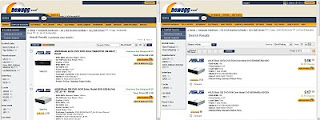
Newegg Site RedesignNewEgg's New Look for 2010.

Next, the font size on the product listing pages grew a few sizes. I'm not sure what it is about the font, but it doesn't look right in the context of the page. It's hard to get more specific about it, but I just don't like the way it looks.

Closing Thoughts
If I could communicate one thing to web designers, it would be this: remember that your site's user interface does not belong to you, it belongs to your users! Ask them for feedback, listen to the responses, and for God's sake if it's not broken, don't fix it!!

Let's just hope that craigslist never updates their interface.

I'm not the only one who feels this way:
http://youtube-global.blogspot.com/2010/03/new-video-page-launches-for-all-users.html
http://www.underconsideration.com/brandnew/archives/an_inconvenient_drop_shadow.php
http://blog.wikimedia.org/2010/a-new-look-for-wikipedia/

Tuesday, March 9, 2010

Automotive Design Disasters

When a car manufacturer decides to introduce a new vehicle, it takes dozens of people and many thousands of hours of work before the first completed vehicle rolls off the assembly line. These people work in teams to design the exterior, the interior, the engine, the chassis, and the suspension down to the finest detail.

Part of the automotive design process includes continuous peer review and design changes to make the vehicle look and operate as perfectly as possible.
However, I have to question the designers who put their stamp of approval on the following designs, because these vehicles have to be some of the worst automotive design disasters in recent history!

Scion xB Design Disaster
The 2007-present Scion xB has one glaring design error. Can you spot it? This vehicle has just one reverse lamp, positioned off-center on the left side of the bumper. Would you wear a pair of pants with only one back pocket? Would you listen to a stereo with only one speaker? Absolutely not! So why on earth would you make a car with only one backup light? I suppose this might look good if you are a cyclops or that chick from Futurama.
Mitsubishi Lancer Wagon Design DisasterHoly taillights, Batman! The taillights on this Mitsubishi Lancer Wagon are only slightly shorter than the Sears Tower. Not only will they make other drivers extremely aware of when you're coming to a stop, but if you live near the coast you can park this car up on a cliff and use its towering red lights to direct incoming ships safely to the harbor!

The Nissan Cube is neither hip nor square. It's not a van and it's not a sport-utility vehicle. It's not fast or sporty, nor is it intended for towing or going off road. I'm not really sure what it's purpose is, but this much I do know: it is hideously ugly from every angle!

Nissan aren't the only ones who can make an ugly, box-like vehicle. Take a gander at this Pontiac Aztek crossover! From its double-nostril front end to its plastic-clad sides and depressing roofline, this vehicle is an absolute monster that no doubt incorporates every single idea the design committee came up with. I cannot imagine why they stopped production after just 4 years...

Cadillac may be "The standard of the world" when it comes to luxury, but even the world-famous luxury car maker has had its share of design disasters. Take this Cadillac Seville for example. Its "bustleback" design looks less sophisticated and more like the car got rear-ended in a crash.
Speaking of ugly rear ends, check out the exhaust on this Porsche Boxster! That's right, a single pipe, dead center. Pardon my French, but the design and location of the exhaust pipe on this car looks just like an arsehole. I'm sorry, but there is just no nice way to call this one.
Hey, is that a pipe organ on wheels? Nope, it's just the rear end of a Lexus IS-F. The designers of this sporty sedan went more than a little overboard with the number four. Four doors? Check. Four wheels? Check. Four exhaust tips? "Oh what the hell, let's do that too!" they must have said. This is one design that should have been four-bidden!

A modern car is a complex system of electronic and mechanical systems working together in perfect harmony. In fact everything under the hood is so perfectly set in place that drivers are discouraged from ever knowing what really goes on thanks to the prevalence of plastic engine covers. These pieces of injection-molded junk are used excessively today in an attempt to limit access to your own car and to cover up the fact that today's engines look extremely lame.

The dashboard of the Toyota Echo may be one of the most visually unappealing designs I have ever seen. From its center-mounted instrument cluster to its shapely glove compartment, this thing looks like there was even less thought put into it than the movie "Gigli." How did they not realize how bad this looks?
Whether you're going to the moon or to the grocery store, the dashboard of this Nissan Quest minivan will make every trip and adventure! Its bizarre spaceship-like layout throws decades of intuitive and ergonomic designs out the window in favor of something that looks like a busy-box toy for adults.

Good God Almighty! The mother of all speedometers may be the single biggest thing about the Mini Cooper. The gauge is almost as large as the steering wheel, and is so ridiculously large that even blind people can see it. What an awful, awful design!

Look, I understand that designing cars is hard work - but we're not talking about putting a man on the moon, here. We're talking about shaping steel and glass into pleasing and practical shapes that people can feel good about buying. The majority of automakers have got this down pat - but as we can see here, some of them still need help when it comes to producing cars that are not disasters of design.

I am not the only one who feels this way:
http://blog.cargurus.com/2009/07/17/the-ugliest-cars-of-2009-and-2010
http://www.scottbradford.us/2010/01/12/the-ugliest-cars-of-the-2010-model-year/

Saturday, March 6, 2010

Extreme Consumer Products are Extremely Lame

All my life, I always thought that the world was a pretty normal place. But as it turns out, I was wrong. The world is a very extreme place. Life is just one heart-racing, adrenaline-pumping adventure after another. What's that? You mean your life isn't like that? Well, you'd think we were a nation of nonstop adventure junkies based on the skyrocketing number of extreme consumer products out there!

Xtreme Consumer ProductsI suspect that the flood of extreme consumer products began in the beverage industry. For years, extreme sports enthusiasts have apparently been unable to quench their "xtreme" thirst with ordinary beverages such as water, juice, and soda. This led to the development of energy drinks, which are carbonated beverages similar to soda but with absurd amounts of caffiene and other allegedly "natural ingredients."

One of the first xtreme beverages to hit the scene was Monster Energy Drink. Besides classic Monster, it is also available in several varieties including a low carb version and a coffee-flavored version. Monster Energy has branded itself as THE drink for the extreme lifestyle by sponsoring events such as motocross racing and the X-Games.

So if you play regular sports like baseball and basketball, you drink regular beverages. If you do extreme sports like backflipping an ATV over a train, you drink extreme beverages. Fair enough. But I think that the number of products claiming to be extreme is getting out of control. I'm sorry, I meant to say "x-treme."

We don't use regular toothpaste anymore, we use Aquafresh Extreme Clean. We can't just remodel our house, we get an "extreme makeover." We can't use ordinary deodorant, we use Right Guard Xtreme deodorant. We eat Xtreme flavored chips and snacks from Pringles. We snack on Xtreme Snickers candy bars. We connect to the Internet using D-Link Xtreme wireless routers. We work with Xtreme tape measures from Stanley. We chat on xtreme cell phones from Samsung. Even Hasbro is putting an xtreme spin on the classic board game "The Game of LIFE." Look for "The Game of LIFE: Extreme Reality Edition" coming soon!

The whole trend of mundane, everyday products being rebranded and reintroduced as "xtreme" products really bugs me. I am not a (completely) stupid person! I can tell that the only difference between regular Pringles and the "xtreme" Pringles is the label on the can and a little bit of flavor additive! There is definitely a limit as to how extreme a product such as potato chips can really be.

What if D-Link's regular routers transmitted information at 54mbps and the Xtreme routers transmitted information at 540mbps? What if Right Guard made a deodorant that you only had to apply once per week? What if Pringles started using capsaicin extract in their flavoring? These products would deserve to be called "xtreme" if they really existed. However, this is not the case with the products you see at the store labeled "xtreme." I think that "xtreme" products are NOT significantly more extreme than their competitors in any way.

The truth is, D-Link's regular and Xtreme routers contain the same electronic components and have the same function, but one has a slightly different package. Woo-freaking-hoo. At the end of the day, the Xtreme router is not xtremely faster than the regular one. The Xtreme Pringles don't taste all that different from ordinary Pringles. I don't have to handle them with gloves or keep them away from children. The Xtreme deodorant doesn't contain any magic ingredients not found in ordinary deodorant. There is absolutely nothing more extreme about a Stanley Xtreme tape measure over a regular tape measure that costs less.

Taking a regular product and re-branding it as an xtreme product is the hottest new trend in marketing consumer goods these days. This explosion of xtremely lame consumer products is xtremely annoying. At this rate, it won't be long before "xtreme" sounds as dated as other buzzwords such as "radical," "groovy," and "da bomb!" This is one marketing trend that I would love to see laid to rest.

Thursday, February 18, 2010

What's So Wrong With Sobriety?

Beer. Alcohol. Liquor. Booze. Whatever you call it, partaking in the consumption of spirituous beverages is one of the oldest human traditions. From disciples sharing wine with Jesus to the modern ritual of college beer pong, getting drunk has been a tradition throughout history. But for me, drinking is one activity that doesn't live up to the hype.

I've tried malt liquor, hard liquor, and a variety of mixed drinks. I've tried drinking with friends, by myself, and even in Las Vegas. I've had drinks at weddings, on New Years, and on special occasions. Each time it fell short of my expectations.

I cannot say that I have honestly enjoyed the taste of drinking or the way it made me feel. Drinking alcohol does not make me feel happy or awesome. It does not make me feel young or energetic. It just makes me feel kind of sick and leaves a bad taste in my mouth. It also makes me sleepy.


In fact, alcohol makes it very hard to do the things I enjoy such as thinking and making rational decisions. It makes it harder to speak, to read, and to remember things. Drinking impairs my ability to type and to drive, which are two things I enjoy very much.

I'm not straight edge and I'm not trying to force any kind of beliefs on you, dear reader. Honestly, it doesn't bother me at all that other people enjoy drinking.
All I'm saying is that when I tell other people I don't enjoy drinking, they look at me as if I had just sprouted a third eyeball in the middle of my forehead. They treat me like a social outcast. I often feel alienated from friends, family, and co-workers simply because I don't enjoy drinking.

For whatever reason, drinking is just not fun for me.
I have not found anyone else who understands the way I feel, because the only other non-drinkers out there feel very strongly about making a statement as they stand on some very high moral ground about the lifestyle they choose to live.

Some people assume that my dissatisfaction with alcohol is because I haven't found the right drink. These people will try very hard to pressure me into hanging out with them and going drinking. On the rare occasions when I do tag along, I am embarrassed for my friends as they slur their speech and act like fools. It's just not my idea of a good time.

I sometimes wonder if maybe there is something wrong with me. How can I be the only person who doesn't enjoy the celebrated act of intoxication? Everyone from the wino on the street to brilliant inventor and patriot Ben Franklin enjoyed the fermented beverage enough to promote its virtues to others.
So I ask you, what is so wrong with being sober? Why does everyone have to give me such a hard time about it? Is it really so weird that I don't think beer is the greatest invention ever?

I am not the only one who feels this way:
http://iusedtobestraightedge.com
https://web.archive.org/web/20101223084814/http://allphilosophy.com/topic/351
http://ask.metafilter.com/49711/Why-is-drinking-alcohol-not-enjoyable-for-me
YouTube: 80 Percent Of Roommates Got So Drunk Last Night

Wednesday, January 13, 2010

Why The Kindle, Nook, and Other E-Book Readers Suck

I like technology that makes sense and makes my life easier. Voicemail is a great idea because it lets people leave messages for me when I am busy. Cruise control on cars, that's another great invention. But I fail to see what's so awesome about electronic book readers like the Kindle, Nook, and Sony Reader.

Why E-Book Readers SuckElectronic reading devices are very trendy right now, and I just cannot figure out why people like them so much! When compared with traditional bound and printed books, it seems to me that e-readers are a vastly inferior technology. Here's why:

An electronic book reader is an expensive investment. Amazon's Kindle reader costs $259 for the 6-inch version and $489 for the 9.7-inch DX version. Barnes and Noble's Nook reader is also $259, and Sony's line of e-readers (cleverly named Reader - nice one, Sony) ranges from $199 to $399. Wow! Reading a plain old paperback book does not require any special hardware other than your eyes and your hands.

When you think about it, an e-book reader costs about the same as a netbook computer yet has less functionality. Both devices can display electronic books and RSS feeds, play MP3s, and access the Internet via 3G and Wi-Fi. However, a netbook can also be used to run programs, access email, watch videos, and more. Netbooks also feature full color screens and keyboards which make them much more suitable for accessing the Internet than e-book readers.

Another problem with e-readers is battery life. Both the Nook and the Kindle feature internal rechargeable batteries which last 10 and 14 days, respectively. However, both of these pale in comparison to traditional bound-and-printed books which never need to be recharged.

When it comes to durability, traditional books beat electronic readers into the dust. A paperback or hardcover book can survive getting banged around in a backpack all semester and still be perfectly readable. Accidentally dropping an e-reader could result in a scratched or cracked screen, or in the worst-case scenario, a $259 paperweight. Don't believe me? Check the comments from Kindle users on Amazon's Kindle Drop Test video.

Borrowing a hardcover or paperback book from a friend is extremely easy. Borrowing an e-book from a friend is, well, not so easy. Currently, Barnes and Noble's Nook is the only platform that lets you lend your electronic book titles to a friend. There is a maximum time limit of 14 days your friend must also have a Nook reader, PC, Mac, or iPhone. I hope Grandma can speed-read through Harry Potter in less than two weeks!

One heavily advertised feature of e-book readers is their ability to store up to 1,500 books on the device's memory. Now I don't know about you, but I usually just read one book at a time. It's nice that they give you so much space, but is it really necessary? E-books are not MP3s, and I honestly don't plan to read through hundreds of volumes of literature the way I would listen to hundreds of songs on an MP3 player.

When it comes to purchasing books, retailers such as Amazon and Barnes and Noble are quick to offer their electronic titles at discounted prices. Amazon has Dan Brown's "The Da Vinci Code" as a hardcover book for $26.40 or paperback for $9.99. Kindle users pay a paltry $6.39 for the same title in electronic format. It would seem at first that owning an e-reader would allow Kindle users to save piles of money on their book purchases, but sadly this is not the case.

The truth is that serious readers already know where to get the best deals on books. Whether it is trading in merchandise at the used bookstore, patronizing the public library, or browsing websites like half.com and eBay, true bookworms never pay the full cover price for their books. That same copy of The Da Vinci Code sells for just $0.75 cents on Half.com in Like New condition!

In many cases, perfectly good books can be purchased at thrift stores and yard sales for 50 cents or less. I picked up a mint copy of Herman Melville's classic Moby Dick (published by Bantam Books) for a mere 15 cents at my local Goodwill. The same book costs $4.95 for a digital copy at Barnes and Noble. Why pay the extra $4.80 to read about Captain Ahab on an electronic device if you don't need to? Electronic books are still not as good of a bargain as used books and probably never will be.

Additionally, I can think of several ways in which traditional bound-and-printed books will always be a better choice than electronic books. For example, my mother would absolutely love to unwrap the newest thriller from Jeffrey Deaver on her birthday. However, I cannot give her an e-book to unwrap, nor could I get it signed by the author at a book signing.

Non-electronic books are often gifted in other ways as well. Religious texts such as the Bible, the Torah, and the Qu'ran make excellent family heirlooms when they are handed down from generation to generation. Proprietary electronic devices do not. Honestly, do you really think your great-grandchildren will still be using Micro USB and 3G technologies decades from now? I sure hope not!

Regular books are also excellent for situations where I really would not feel comfortable using a $259 electronic device. Take the kitchen for example. A spiral-bound cookbook will always show your favorite recipes, even if it gets a little marinara sauce or water on it. E-readers are much more delicate and might not fare as well in a hot, messy kitchen environment.

Also, I can leave a regular book in my car on a hot summer's day in Phoenix without worrying about ruining it. That's something I cannot do with an e-reader.

Another great thing about dead tree books is that they can be used for the duration of a long flight, including take-offs and landings. People with electronic readers must adhere to the same strict rules as other personal electronic devices aboard an aircraft. Hope you don't have to land during a suspenseful part of the chapter!

Finally, there comes a time when every book lover must prune their shelves to make room for new books. It is easy for me to find a new home for books I did not enjoy or do not wish to keep any longer. They can be donated to charity, given away to friends, exchanged for credit at a local bookstore, or in the worst case, put in the recycle bin.

What do you do with the $4.95 copy of Moby Dick you purchased six months after you finished it? So far, there are no trade-in or buy-back options for e-books. You are stuck with them my friend, so choose your purchases wisely!

When you consider the high cost and limited functionality of today's electronic book readers, I just don't see why anybody would ever buy one! You don't need to read between the lines to see that traditional bound-and-printed books offer greater flexibility and freedom of ownership at lower prices than electronic books. So far as I can tell, e-books are a very innovative solution to a problem that never really existed in the first place.

I'm not the only one who feels this way:
http://www.markhaddon.com/e-books
http://mikeshea.net/Seven_Swords__44000_words.html
http://jasonkinner.wordpress.com/2009/09/07/a-few-reasons-e-book-readers-suck/
http://www.youtube.com/watch?v=GI0Zry_R4RQ

Monday, November 16, 2009

Why Black Friday Is a Scam for Consumers

In the United States, the day after Thanksgiving is the single busiest shopping day of the year. This day marks the beginning of the Christmas shopping season. It is the starting pistol that signals people across the country to begin their search for that perfect gift en masse. Although Black Friday continues to gain momentum year after year, I think that it becomes more and more of a scam for consumers each year.

Why Black Friday Is a Scam for ConsumersThe story goes that retailers who operate at a loss most of the year do enough business on Black Friday to make a profit and thus move their accounting figures from red to black, hence the name. Retailers encourage shoppers to spend more by offering one-day-only sales on limited quantities of goods at drastically reduced prices. These no-coupon, no-rebate, and no rain check sales are the stuff of legend, which is why they occur just once a year.

In the days leading up to Black Friday, Internet message boards begin buzzing with rumors about which stores are having the biggest sales. People post store flyers and advertisements online and discuss which stores are having the best deals. Consumers get shaken up with excitement over these deals as the pressure builds like a bottle of soda.

On Thanksgiving Day people begin lining up outside retail stores like Best Buy, Wal-Mart, Costco, and the shopping mall. They will endure darkness, discomfort, and cold weather all night long just to be first in line on opening day. They will take time off from work and be away from their families at the prospect of saving a few dollars on some hot consumer item. Some people even camp out days in advance!

This kind of insane consumer loyalty has expanded beyond Black Friday and is now commonplace. People have camped out for the release of major video game systems including the Xbox 360, the PlayStation 3, and the Nintendo Wii. People will line up outside of a movie theater hours before a film opens to catch the first midnight show (Star Wars anyone?). Some people will queue up outside of bookstores waiting for the hot new titles from JK Rowling wearing homemade costumes of the characters! They will wait in line for hours to buy concert tickets, iPhones and just about everything else.

On Black Friday, the pressure reaches a critical mass. Spots at the front of the line are sold for hundreds of dollars in the hours before stores open. Crowds of ravenous shoppers tear through the stores as the front doors are unlocked. People shove each other out of the way as they run down the aisles. Store workers are trampled and injured in the mass of confusion. Shoppers motivated by greed will buy two or more of a hot item hoping to resell it at an inflated price.

Black Friday is a frenzy of consumer spending unlike anything else in the world. It is an orgy of spending and mass consumption. This poses the question: is getting a great deal worth the true cost of Black Friday deals? I don't think it is.

The whole ritual that Black Friday has become just sickens me. I can't believe that people will stand in line outside of a store all night so they can have the "privilege" of being the first to fork over their hard earned cash for some mass produced piece of garbage. I can't believe they will pay hundreds of dollars to cut to the front of the line. I can't believe they can be so brutal to their fellow man when storming the aisles in search of bargains. They trample each other like a herd of wild animals instead of civilized humans. Christmas is a time for joy, peace, and love. Black Friday is just the opposite: it is all about greed, selfishness, and a lack of compassion for others.

To take part in the madness of Black Friday is to give up your dignity as a consumer. Standing in line all night says to the world that there's nothing you won't do to save a few bucks. By standing in line, your friends, family, co-workers, and even retailers can see what a gullible fool you are. Am I being too harsh? Absolutely not, because only a fool would stand in line all night risking their own safety and comfort to buy that must-have present! In all likeliness, a present that will be forgotten about by next Thanksgiving.

I like getting great deals as much as the next guy, but the truth is that many of these hot deals just aren't worth it. An example might help illustrate my point. Let's say that a big-box electronics retailer is advertising a $100 digital camera for $49 in-store, one day only. $51 dollars off sounds like a great deal, right?

Well if you arrive at the store at midnight and stake out a place in line until the store opens at 8am, that's eight hours of waiting. You only saved a little over $6 dollars an hour by standing there all night (assuming you actually get the camera). Is that $6 dollars worth more to you than an hour with your family? Is it worth more than an hour of sleep? This is the hidden cost of these "killer deals:" you pay for them with your time.

Personally, it's worth it to me to pay the regular price and get a good night's sleep. It's worth it to me to not get trampled by some foaming-at-the-mouth, bargain-crazed shopper on the way to the electronics department. It's worth it to me to maintain my dignity as a shopper. No product is so desirable to me that I would pay twice its retail value to a scalper selling one on Craigslist.

Don't get me wrong, I like gadgets and technology. But nothing is so important to own that I would lie in a sleeping bag on the ground and watch the sun come up for. That shitty feeling would forever be associated with that product in my mind and I would remember it every time I used it.

Do the world a favor and shop sensibly this year on Black Friday. Don't join the hoards of compulsive consumers in wrestling over Bluetooth earpieces. It's not worth your dignity or your time. Remember, it's just stuff.

I'm not the only one who feels this way:
http://artvoice.com/issues/v5n51/my_shopping_orgy
http://www.theguardian.com/commentisfree/2008/nov/29/useconomy-retail

Monday, October 19, 2009

Celebrity Gossip Magazines are Completely Irrelevant

It seems like there is a magazine for every hobby and interest these days. There are even magazines for people who are interested in the lives of other people. One of the lowest forms of entertainment are the magazines that dish out the latest gossip on Hollywood celebrities and their off-camera lives.

You know them as US Weekly, People, and Life & Style magazine. These weekly rags appear at the checkout of every grocery and convenience store from coast to coast. Co-workers gaze at them during their lunch breaks. Women flip through them as they get their hair or nails done. And yet nothing between the front cover and back cover is of any importance at all!


The idea that anyone would care to read about the everyday lives of actors, singers, and other high profile individuals is lost on me. Celebrities are not more special than ordinary people, and everything they do and say should not be taken as gospel. Being an actor is a job, just like flipping burgers and waiting tables are jobs. Someone has to do it. Celebrities do not deserve special treatment just because they made a record or starred in a film.

The headlines make every article sound like the most monumental news since Moses delivered the 10 Commandments. Check out who's engaged and who's getting divorced! Look at the dress that so-and-so wore to some stupid event! Holy s**t, this is major life-changing news that YOU need to know!! And of course it's always printed in the most eye-catching, bright yellow, 96-point text that makes real layout designers cry.

Guess what, people who star in movies aren't any different from people who assemble widgets for a living. They get married and divorced, they have children, and they shop at the store. They go to the beach and drive cars just like normal people - because that's exactly what they are. They're just regular people and they should be treated as such.

I hate the idea that people fawn over celebrities and everything they do. Wow, look at Britney Spears stopping for coffee at Starbucks! Check out this person who gained or lost weight! Look at her hair, nails, and clothes! SO WHAT?! A high-paying job is no excuse for such ridiculous special treatment.

If you think celebrities are such amazing, gracious, generous super-people, I've got news for you: being directed around a soundstage by someone else for eight months while wearing too much makeup does not make one qualified to give opinions on current news and world events.

Celebrity tabloid magazines don't need to exist. They are nothing but photographs and ads with no real articles or content at all. They are a form of Prolefeed, a term first coined by George Orwell in his novel "Ninteen Eighty-Four." They entertain the most easily-distracted people in society with lots of pretty pictures. They provide drama and excitement to people whose lives are lacking both.

If you think this passes for entertainment of any sort, you're wrong. Celebrity gossip magazines aren't worth the paper they're printed on. They are not even worth complaining about beyond what I have already.

I'm not the only one who feels this way:
http://www.airliners.net/aviation-forums/non_aviation/read.main/1945863/
http://everything2.com/title/celebrities
http://img40.imageshack.us/img40/1736/200905amusingourselvest.png

Friday, October 16, 2009

Why Car Magazines Suck

The Automotive Gossip industry is almost as big and competitive as the Automotive industry itself. On the newsstand you have magazines such as Car and Driver, Road and Track, Motor Trend, and AutoWeek. On the web you have AutoBlog, and Jalopnik. There are no shortage of publications claiming to have the most authentic and most current industry news about the car industry.

For the longest time, I enjoyed keeping up with the news in the automotive industry through magazines and periodicals. After a while though, the magazines all started to sound the same to me.Why Car Magazines Suck
One problem with car magazines is that the reviewers are always so snobbish about the vehicles they test drive. They expected the Cadillac to be more luxurious or the Mustang to be faster. They complain about the suspension being too stiff or the engine not powerful enough. They gripe about automatic transmissions being slushy or a steering wheel that feels too small.

These automotive pundits have forgotten that the majority of their readers do not get behind the wheel of a high-performance or exotic car every day. Most drivers have very boring cars, and we would be happy to have a vehicle that works without breaking down on us.

For example, the 14-year old economy car that I drive has been nothing but one expensive repair after another during the six years I have owned it. I would gladly take home any new car featured in a magazine, even if the reviewer thinks the leather trim is the wrong color.

After a while, the things that reviewers dislike about cars start to sound petty, insignificant, and downright ridiculous. It's almost as though they approach every vehicle with a magnifying glass rather than looking at the bigger picture, which is this: car manufacturing has come a LONG way over the past few decades. New vehicles are dramatically safer, more comfortable, and more efficient than ever before. There's almost nothing to complain about, so they magnify the smallest quirks in a vehicle to write an article.

What car magazines should focus on is helping people find the right car for their needs. How fun it is to drive, how well it performs in everyday situations, and how much it costs to maintain. These are things that average drivers would like to know before purchasing a new vehicle.

Instead, car magazines love to bombard you with useless facts, like how fast it goes around some fucking racetrack in Germany or how the new Mercedes has 0.006 inches more legroom than the BMW. They blast you with statistics that really aren't that important or relevant to how the vehicle will be driven in the real world.

They claim one car is superior to another because it has six more horsepower or is a fraction of a second faster down the dragstrip. Honestly, I would be happy to have a car with a zero-to-sixty time that's not measured in minutes! The automotive gossip industry is so wrapped up in cramming data down your throat that they've lost touch with the people who truly enjoy the experience of driving.

In spite of all this, the automotive gossip industry stronger than ever. An entire subculture of people now post their thoughts about every new make and model to be announced. Log on to any automotive news forum or message board to find out what Joe from Philadelphia thinks of the newest Kia crossover. Seriously, who gives a crap? These armchair experts probably drive around in a 1992 Toyota Corolla and yet trumpet their opinions about the newest generation of muscle cars like they're the freaking world experts.

As a whole, the automotive gossip industry is full of self-absorbed know-it-alls and "experts" who quote arbitrary facts out of context to try and seem smart. Headlines that are of paramount importance one day are discarded and forgotten the next day. Everyone's looking for the next big thing and living in the "now" with no thought to the past or future. I'm sorry, but car magazines just aren't fun to read anymore.

I'm not the only one who feels this way:
http://www.thetruthaboutcars.com/car-and-driver-road-track-motor-trend-automobile-americas-buff-books-laid-low/
http://autosnob.blogspot.com/2009/10/power-of-preconceptions.html

Sunday, September 6, 2009

Cash For Clunkers Is An Absolute Disgrace

In July of 2009, the US Government approved a legislative bill known as the Car Allowance Rebate System, or CARS. This program offered new car buyers a large cash discount when they traded in a used vehicle that met specific criteria. The motive behind the program was to encourage drivers to purchase more fuel-efficient vehicles. In spite of this noble effort, I feel the way the program was carried out was an absolute disgrace.

Cash For Clunkers Is An Absolute DisgraceThe truth is, these trade-in vehicles were disposed of in the absolute worst way I can even imagine. Rather than being refurbished, sold to low income buyers, being recycled at scrapyards, or exported to overseas buyers, these vehicles were permanently disabled by replacing the engine oil with an engine-seizing solution.

When poured into the engine and run for a few minutes, the engine seizes up and the car becomes inoperable. As a result, the engine can never be swapped into a different vehicle or used to repair an existing vehicle.

While I can understand the incentive behind getting people to drive fuel efficient cars, I cannot be okay with destroying vehicles that are in perfect working condition. Just look at any of the videos on YouTube of CARS victims meeting their demise.

Take this 1998 Cadillac for example. It is in excellent physical condition and it is vastly more efficient than the vehicle I'm currently driving. The idea that anyone would consider this vehicle a "clunker" is ridiculous! This is not a one-time example; there are dozens of videos of good cars being destroyed in an astonishingly wasteful and inefficient way.

The trade-in vehicles from the CARS program could have gone to so many other good uses instead of being destroyed. They could have been sold to salvage yards, given to hardworking impoverished families that desperately need reliable transportation, or exported to third world nations for use as emergency vehicles or otherwise. They could have been donated to charities, or refurbished and put back on the road. As far as I am concerned, the CARS program is an absolute disgrace.

I'm not the only one who feels this way:
http://en.wikipedia.org/wiki/Car_Allowance_Rebate_System#Environmental_effects

Thursday, September 3, 2009

10 Stereotypes You Meet In College

One of the most eye-opening things about my time in college was the people there. It was quite a shock for me that a school with so many tens of thousands of students could have so many people who look and act the same. There were only about ten varieties of people and thousands of copies of them everywhere! I thought it would be a clever and original idea to start a list of them and their defining characteristics.10 Stereotypes You Meet In College
Well as it turns out, plenty of other people have already had this same idea. But I went ahead and recorded my observations anyway, because if you currently attend or are planning on attending college, you'll likely run into many of these same people. Don't say I didn't warn you!

1). The Party Guy - This guy thinks of himself as a "beer connoisseur" rather than "alcoholic." He's got the standard red Solo cup in his hand every time you see him. The Party Guy can talk for hours about why Beer X is better than Beer Y, in spite of the fact that any beer that's 75 cents a can is going to taste like piss regardless. When he's sober, he loves to talk about going to the lake and the dirt bike he used to have. He will drop out within the first year to work for his uncle's construction company and to help fund his growing collection of tattoos.

2). The Educrat - This person has made a career out of being a student. They have managed to make it to age 25 without having a real job and have no idea about the real world outside of what they've heard in lecture. They get high grades in challenging subjects like physics and math, yet struggle with simple tasks like bike locks, making coffee, and safe driving. They have been taught what to think, not how to think. Know everything but understand nothing. These people make great Teachers' Assistants.

3). Facebook Girl - She spends the entire lecture staring at her laptop and playing Farm Town. Although she never turns in a single assignment or takes notes, she finishes the semester a full grade above you because she kicks ass at tests. She's kind of hot in a girl-next-door sort of way. She has the shortest shorts and the biggest Macbook.

4). Sorority Girl - This gal is often seen walking around campus with her crew of recently-inducted members of a Sorority. They all sport matching Greek shirts atop their Baby Doll figures. She's not too good with computers but has a cell phone with a full keyboard for rapid-fire text messaging her friends about going out for drinks this weekend. Girls night out whooooo! She has never been seen finishing an entire plate of food.

5). Abercrombie Guy - It's the first day of class and he already knows the instructor on a first-name basis because his older brother had the same class a few years ago. You thought this kind of thing was over once you finished high school, but the reality is that it just gets worse. Abercrombie Guy is on the basketball team and often misses class because of away games. This sucks for you because he's on your team for the semester project and he actually asked you if PowerPoint was "the program with the slides." He spends every lecture playing "Breakout" on his BlackBerry.

6). The Freshman - This recent high school graduate has just started a four year paid vacation courtesy of mom and dad. The Freshman's parents have provided him with a room at the expensive new dorms, the deluxe meal plan, a brand new bike or car, and a new laptop that he got for a graduation present. This guy does not appreciate how good he has it and has the nerve to complain about getting up for a 10am class - and he lives on campus!

7). The Lifetime Achiever - This 47 year old parent of two completed their Associates degree when you were in kindergarten. They joined the rat race and started a family. Now that the nest is empty and they need a bachelor's degree to advance their career, they are back in the classroom. The Lifetime Achiever is equipped for success with their microcassette recorder and rolling backpack. They arrive 15 minutes early to class and constantly interrupt the lecture every five minutes to ask the instructor for clarification or to repeat something. They are very politically informed and take every opportunity to engage the class in discussion - but only if you agree with them.

8). The Phantom Classmate - He wasn't there for the first day of class, but he did make an appearance the first week asking around for an extra copy of the syllabus. Every now and then he misses a couple of weeks worth of lectures. The Phantom Classmate will show up randomly throughout the semester, never bringing more than the clothes on their back. The other students don't even know this person's name. The last you'll ever see them is on the day before an exam, whispering to the instructor about a withdrawal slip.

9). The Average Guy - The Average Guy is often seen shuffling to class in his basketball shorts and flip flops. He is always up to date on the newest movies and professional sports scores. He watches ESPN and listens to modern rock on his iPod. He drinks a little but is not a hardcore party animal like The Party Guy. You can't really figure out what he's into. The Average Guy doesn't seem to have any passion or zest in his life beyond lust for consumer products and brands, but he can talk for hours about which cell phone company has the best service. He passes his courses but doesn't ever absorb anything.

10). The Overachiever - Look no further than the quiet girl in the front row to find the Overachiever among you. This girl is majoring in Biochemistry and minoring in Early Childhood Development at the same time with a 3.5 GPA, but is thinking of switching to Nursing. She's taking 21 credit hours this semester, but only because the enrollment advisor wouldn't let her take more. You can almost see the crushing student loan debts reflected in her thousand yard stare during lecture. Don't bother asking her out for pizza because she's always busy studying. She has no life outside of school and will be filled with regret when she has her Masters degree at 25 and not a single happy memory of the last eight years.

I'm definitely not the only one who feels this way: 
https://web.archive.org/web/20100710051537/http://www.thefifthyear.com/2009/02/the-college-stereotypes/
http://collegecandy.com/2009/08/11/the-10-types-of-freshmen-youll-meet-on-campus/  
http://jamoker.wordpress.com/2006/12/13/a-summary-of-the-people-you-meet-in-college/ 
https://web.archive.org/web/20130805031216/http://www.thesangfroid.com/2009/07/30/the-10-types-of-people-you-meet-in-college/